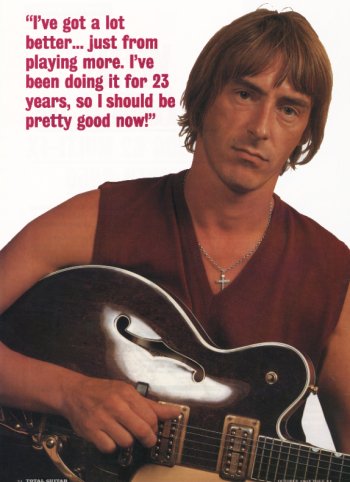
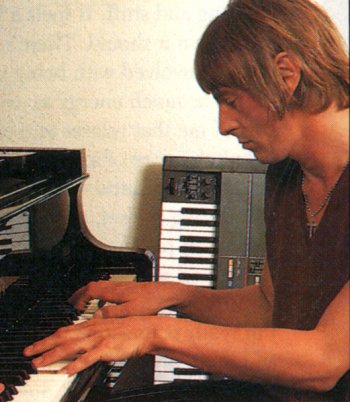
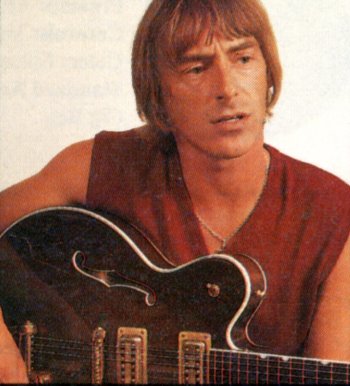
Paul Weller's done it all. Punked out with The Jam, funked out with The Style Council - but then he rediscovered the guitar, and produced two of this decade's finest albums so far When Paul Weller played on BBC2s Later, ..programme recently, host Jools Holland heaped much-deserved praise on the Woking wonders latest album, Stanley, Road. It was, he said, the best album he had heard in years. And Jools is a man who doesn't dish out praise for his fellow musicians too often. Weller's organic approach to songwriting and performance comes as a real breath of fresh air. And his back-to-basics ethics shown on 1993s Wild Wood have been taken even further on Stanley Road. As the albums first track proclaims, he is the very personification of The Changing man. Until recently, Weller's guitar skills were largely overlooked by the masses - people were more interested in his lyrical abilities, political stance, fashion sense and angry young man posturing as The Jams frontman. He even gave up playing the instrument during his questionable Style Council days, the '80s era that he loves to hate. But, via a slew of re-addressed influences from his youth, Weller and his guitar are now virtually inseparable, and at 37 he is being hailed by some as his generations Clapton. Our meeting at his West London office immediately preceded a session with Oasis, during which he returned Noel Gallagher's recent favours by contributing guitar and backing vocals to Champagne Supernova, a track from the forthcoming Oasis album. As I arrived, the elegantly tanned and slim Weller strode towards me with a brusque 'Awright, mate?' greeting. I knew I was going to like him.
You seem to be having more fun with music than ever
Yeah, that's very true. I am enjoying my music better, and I'm getting a lot out of it. I suppose its because I'm less self-conscious about what I'm doing now.
Your vocal phrasing has altered dramatically since The Jam days.
I should fucking hope so! Do you think that packing in smoking would ruin your vocal progress?
Probably, but I couldn't give up. Its the only vice I have at the moment, ha ha! I haven't had a drink in about six or seven weeks, 'cause I had this little incident at an airport in Italy where I was so drunk that I fell down some steps and was dripping blood all over the place. I thought, 'Steady on', and decided to call it a day. Did it feel natural to you to sing in that laddish London accent back in The Jam days?
It did at the time, yeah. Obviously a lot of it came from the punk scene. I was really excited by The Clash and the Pistols when I saw them. It was so English, and the guys were singing in straight English accents. But before that, when I was about 15 or 16, I was still trying to sing like Otis Redding. It was only when I started listening to The Clash that I thought I should sing as naturally as I talked, and that The Jam should be a very English-sounding band. But things change, you know, although R&B and black American music remain my biggest influences. Nevertheless, I hope you can tell that my music is a product of this country, because I'm proud of that. Your singing has changed over the years...
Everybody's saying how much my voice has improved, and I tend to agree with them. But its only been since I stopped thinking about it - and the same can be said of my guitar playing. I've found that the less I analyse what I'm doing, the more instinctive it becomes and the flow is a lot more free-spirited. What do you feel was responsible for your recent change of approach to the guitar?
A lot of it was down to the records I was listening to; old stuff that I hadn't had the time to hear for a long while, like the Small Faces, Free, Nick Drake, Stax, The Who and Revolver-period Beatles. Do you take the guitar more seriously now?
Well, I think I've always been a pretty good guitarist. People should go and check some of the other records I've made, the early ones. There are some good things on All Mod Cons, like some of the twin guitar harmony stuff. There's also a lot of good playing on The Style Councils albums although its not that prominent. People should check the guitar break on Why I Went Missing from the Confessions Of A Pop Croup album. But generally, its just that I've become a lot better over the years. Its just come from playing more. I mean I've been playing now for 23 years, so I should be pretty good! Its like anything really; the more you do it, the better you get. Can you give me a run down of the guitars and amps you are currently using?
I use a 1968 Marshall Bluesbreaker which has a totally different sound to the re-issued models you can get now. My volume is only ever on number two otherwise its like 'blaaah!' I've got two Bluesbreakers actually. I've also got a Vox Supreme that I use on stage. I have a box that lets me switch between the two for the variance in sound. Its got the mid boost on it and also distortion and vibrato and stuff. With guitars, I tend to make the most of my Epiphone Casino, which is a 1966 model. A good year!
A very good year, and mines brilliant. It doesn't have a Bigsby tailpiece like some of the models from around that time, just the regular tailpiece. What other guitars do you use?
Well, there's my 1968 Gibson SG, and on the album I used a late 1960s Gibson Firebird. I also have a three-pickup white custom SG from 1971, I think. That has a really fantastic sound and I reckon its one of the best guitars I've ever played. Do you still use your Ovation?
Yeah, I still have the same tatty old Ovation acoustic that I bought around the time of the Sound Affects album, about 15 years ago. Its the guitar that I've written a lot of my tunes on, so it's a bit special to me, even though it looks a bit worn out and scratched, but that just means its earned its keep! It still feels great to play although I've heard better acoustics. We can get a decent sound with it in the studio, though. You don't appear to be using many effects. Is your sound straight out of the amp?
I use a wah-wah pedal, but that's about it. I just try and keep it as clean as possible to get a better signal from the amp. When did you retire the Rickenbackers?
I used 'em right up until the end of The Jam.
You stopped playing guitar with The Style Council for a while. Why was that?
When The Jam split up, I just wanted to get rid of that whole Rickenbacker sound. As you know, that guitar really has only one sound - a very prominent, very crashy tone. I got into George Bensons style of playing, although I didn't actually set out to emulate him. I didn't seem to have any sound in mind, so I just left it for a while and tried to get away from the guitar. I'm not saying it was good or bad; it was just the way it worked out.
How do you feel about The Style Council these days?
It was a real struggle from day one because no one would accept that I wanted to pack it in with The Jam. But my musical tastes had become a lot more diverse, and I was listening to a lot more jazz, soul and R&B. We did some good stuff, although there were some moments where things weren't as good or convincing as I'd have hoped for. It was quite a change...
Yeah, but what I liked most of all about the Council was that we didn't conform to the crappy music scene of the early-to-mid '80s - just as The Jam were regarded as being separate to the punk crowd. Towards the end of the Council I was getting into other kinds of music, like house and garage, and the album we made, 1990: A New Decade In Modernism, was never released by Polydor - which I think was a mistake. But I've moved on and I've never been into repeating a formula; I maintain my interest in music by doing different things. As you can tell! You played bass On your debut solo album, Paul Weller, and I understand that bass was your first instrument.
Yeah, I was a big McCartney fan and the second guitar I ever had was a bass. Then what? God knows, but I ended up playing guitar. The bass I played on that album and also on more recent stuff was my re-issued Hofner Violin which has such a fantastic sound. I just had to have one, you know. Did listening out for basslines from things like The Beatles Revolver LP have any effect on your guitar playing?
Its an interesting way to look at it. If listening to basslines had any sort of an impact on me as a guitarist, it was only from the point of view of melody, because McCartney was so melodic. How about your use of descending arpeggios on songs like The Changing man and Sunflower. When creating such potent riffs, what are your points of reference?
In those cases, The Beatles - without a doubt. I'm often asked about those sequences because I've used that kind of thing on many occasions, but a lot of other people use the same approach. There's a Faces track called Flying from their First Step album and also No Face, No Name, No Number (Traffic) that are both in that vein. There's just something about that movement that inspires me. There's a kind of tension about it as the notes descend and you're waiting for the chord to resolve. It's pure Beatles - like Dear Prudence. How do you compare performing live now with, for instance, playing in the late 1970s?
In The Jam it was always exciting and there was always a kind of mad tension at the gigs. You always remember the early days - the times when you fought for recognition - as the happier times. We had a residency at a pub called The Red Cow in Hammersmith where we'd see the audience doubling every time we played. We knew we were on the way up after the third gig when the pub landlord gave us a crate of beer along with our fee. They're the things you remember. And it feels hugely different now? I get more from it now. I still get nervous. But I guess, looking back, it was often a struggle to play and sing and stuff. It feels a lot easier now - but then again it should. There's still an element of tension involved with being up there, and I feel there's as much energy as ever. Maybe there's a part of me that relaxes and enjoys it more. It is definitely more of a pleasure to play live, and its not quite as frantic - although it does get a bit like that during the set, especially when I'm doing some lead playing. Your lead work has become a far more important part of your music...
I'm really connecting with what I'm playing now and that's probably the main reason why I'm feeling so comfortable. Solos mean more to me now, although I am a bit cautious. I don't want to get into the situation where I - or anyone else in the band, for that matter - get into extended solos that go on for fucking hours! I've got something to say when I play a solo and if I don't, I won't bother. I never used to connect in that way before.
The young Steve Cradock (from Ocean Colour Scene) has been playing guitar with you since you recorded The Weaver. How do your guitars interact live?
Steve's great. As a guideline we generally follow what's been recorded on the tracks, and I decide who does what. That's the reference point anyway. But we have been playing together for at least a couple of years and we just lock into one another's playing really well. I find that we don't need to talk about it much, because we both instinctively know what we should be doing.
You've been quite vocal about your influences. Does it raise a smile when people like Oasis, Supergrass and Blur say that you have been a big influence on their music?
It's great for me, yeah. But I just think that's how it should be; you pass on something to other people. Just as there will be 11, 12, 13-year-old kids at an Oasis gig who will be so moved by what they see and hear that they'll go home and pester the life out of their parents to buy them a guitar. To be honest, I think its great that kids are getting into playing guitar again after the rut of the '80s when it seemed that every kid wanted to be a fucking computer programmer. Sequencers don't turn you on, then?
I often wonder what kind of a lasting influence there has been given by the generation who were brought up on Depeche Mode, listening to people posing with keyboards. I wouldn't have thought they'd be terribly inspiring compared with the effect of hearing a really good guitarist doing his stuff. People are going out and trading in their drum machines to buy drum kits again, for Christ's sake. It had to happen eventually. It's great news. A lot of your new music evokes the feel of the late '60s and early '70s. Woodcutter's Son wouldn't have been out of place in 1971...
I know what you mean, but I haven't gone out of my way to re-create that kind of sound. It's just what I like to hear. Basically, we're all playing real instruments - I don't like all that digital bollocks. Does production help you get this sound?
A lot of modern, so-called rock bands go for that really hard, toppy production which makes the songs sound transparent. I like to hear raw emotion, the sound of human beings interacting on tape. We don't, for instance, record with a click track, and that's immediately breaking the rules of modern recording. If you're playing together regularly and you're a tight unit, you shouldn't be forced into regimented time-keeping by a click. When a musical performance is truly exciting, it is bound to waver slightly in tempo - that's natural. As the decade progresses, there seems to be less snobbery about musical influences.
I think that's good, and it has to lead to better music. What I call real music - from the heart stuff- seems to be starting all over again. It's a renaissance, if you like. People are getting down to writing tunes and good songs again, and they are able to get out on the road and play them for real. I remember hearing a radio interview with Steve Marriott just before he died. When he was asked about a particular band who were typical of the mid-to-late '80s scene, he said, 'Oh, they're lazy bastards who can't play properly'. And that was true of so many people who were so reliant on technology that they literally couldn't hold it together without a bunch of machines. I love to see bands getting out and doing it - like Supergrass, who are a really tight outfit. What's it like having your father (John) manage you?
It's been good for me. He's the best manager I could hope for. It is a unique situation, I suppose. It feels natural to me, but then its because we've always worked together, right from the early days when we were doing the social club gigs. Do you think you could ever go back to the pub and social club scene?
If I had to, yeah. I'd just do whatever was necessary. When I was starting out again as The Paul Weller Movement, I was playing to only a couple of hundred people at some gigs, so I think I have a good idea of what it would be like. As long as I was happy playing music, no matter what the situation, it wouldn't bother me if I was playing in a pub or a fucking great arena. Is this about getting older?
It is easier to get your ego under control as you get older. You don't always have to have a number one record to feel good about yourself. I'm still quite ambitious, so it's different for me. I was thinking about Bo Diddley, who we met when we played at a festival the other week. He was first on the bill and I just wondered how the organisers could put this guy on supporting The Beautiful South, or whoever. But he's 66, and for him, I suppose, as long as he can get to do his gig to the best of his abilities, he probably feels very content. I can imagine having that attitude when I'm older, instead of always aiming for number one - like Macca. I say Paul McCartney, because he still has a strong desire to be up there at the top. Does being at the top worry you now?
No, it doesn't. But I'm ambitious enough to want to blow every other fucker out of the water when I'm on stage. That's my attitude, and, yeah, I do want to be the best. That doesn't necessarily involve having number one records all the time. There's always a great divide between commercial and artistic success. Yeah. It doesn't mean that I don't like selling records or making money 'cause I do. It's how I make my living. But I've already had number one singles and albums, and its not something that I strive for - although I was really pleased when this last album went straight to number one. I just want to make music that I'm proud of. Hopefully, people will recognise that and jump on board. After being forced to sell your own studio, you must have been very upset to hear of The Manor's closure, having recorded most of your solo material there.
I was gutted. I'd have liked to have had enough money to buy it 'cause it was really nice to record there. It was out of my financial reach, though. Can you think of any riffs that have remained personal favourites over the years?
Well I'd better say Taxman, hadn't I! There's a Bo Diddley riff that I heard him do the other day and it must have been where the Stones got their intro for 19th Nervous Breakdown. Almost every tune on the My Generation album was very inspiring, like The Goods Cone and Much Too Much. I'm more into melodies than riffs. You've been very prolific with album releases, having had four over the last three years or so. Is that likely to be an ongoing trend?
Am I that quick? There was almost a two-year gap between this album and Wild Wood, although I put out Live Wood in between, which was a bit disappointing. It wasn't what I'd call the definitive live album, but I wanted an official one available because there have been about 20 or 30 bootlegs out in the last few years. I wanted to try and capture the band as well. We'd really hit a peak at that time, but I don't think we got it on that album. So you don't plan your album releases?
If I have the songs, I just want to go and record them. If I write 12 or 14 songs that I feel good about and I want to get them down on tape, then nothing in the worlds going to stop me. I don't really have an overall plan - but if its all happening and we're on a roll, then we'll just follow our noses and go for it. Paul Weller's new single. Broken Stones, taken from the album Stanley Road, is out on September 11th. - interview: MARK CUNNINGHAM Pictures: ROB SCOTT |